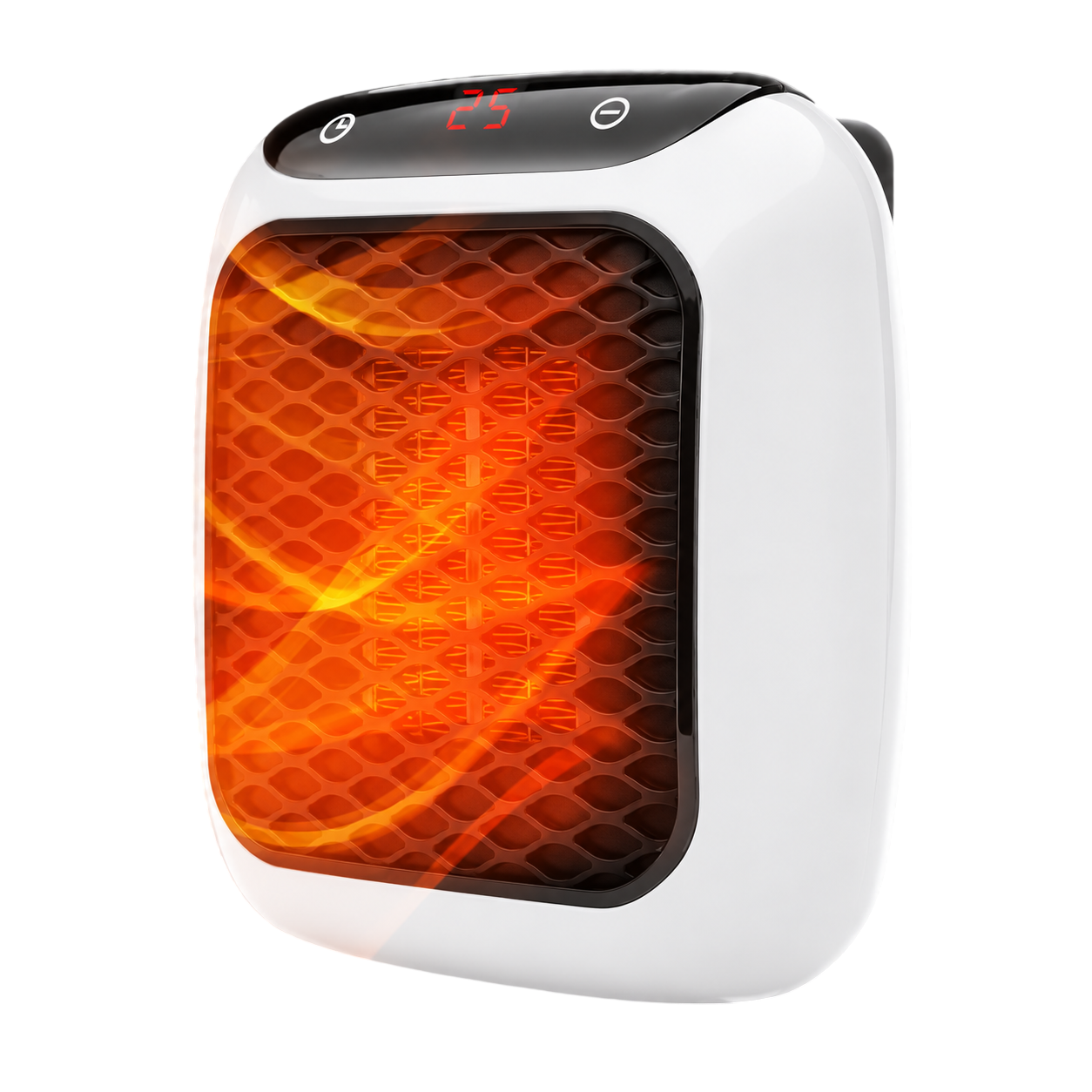
Energy efficient space heaters: what really cuts the bill
Every electric heater converts electricity into heat at almost exactly the same rate, so the real savings come from how and where you use it, not the marketing label on the box.
The honest truth about efficiency claims
A 1,000-watt heating element produces almost exactly the same amount of heat regardless of brand or price — that's basic physics, not marketing. What differs between products is where that heat goes, how quickly you feel it, how well it's controlled, and how long the unit needs to stay switched on to keep you comfortable.
That's where a well-designed heater earns its keep: fast warm-up, a working thermostat, and a timer that stops it running longer than necessary. None of that shows up as a percentage on a box, but all of it shows up on your electricity bill.
Zone heating: the real saving
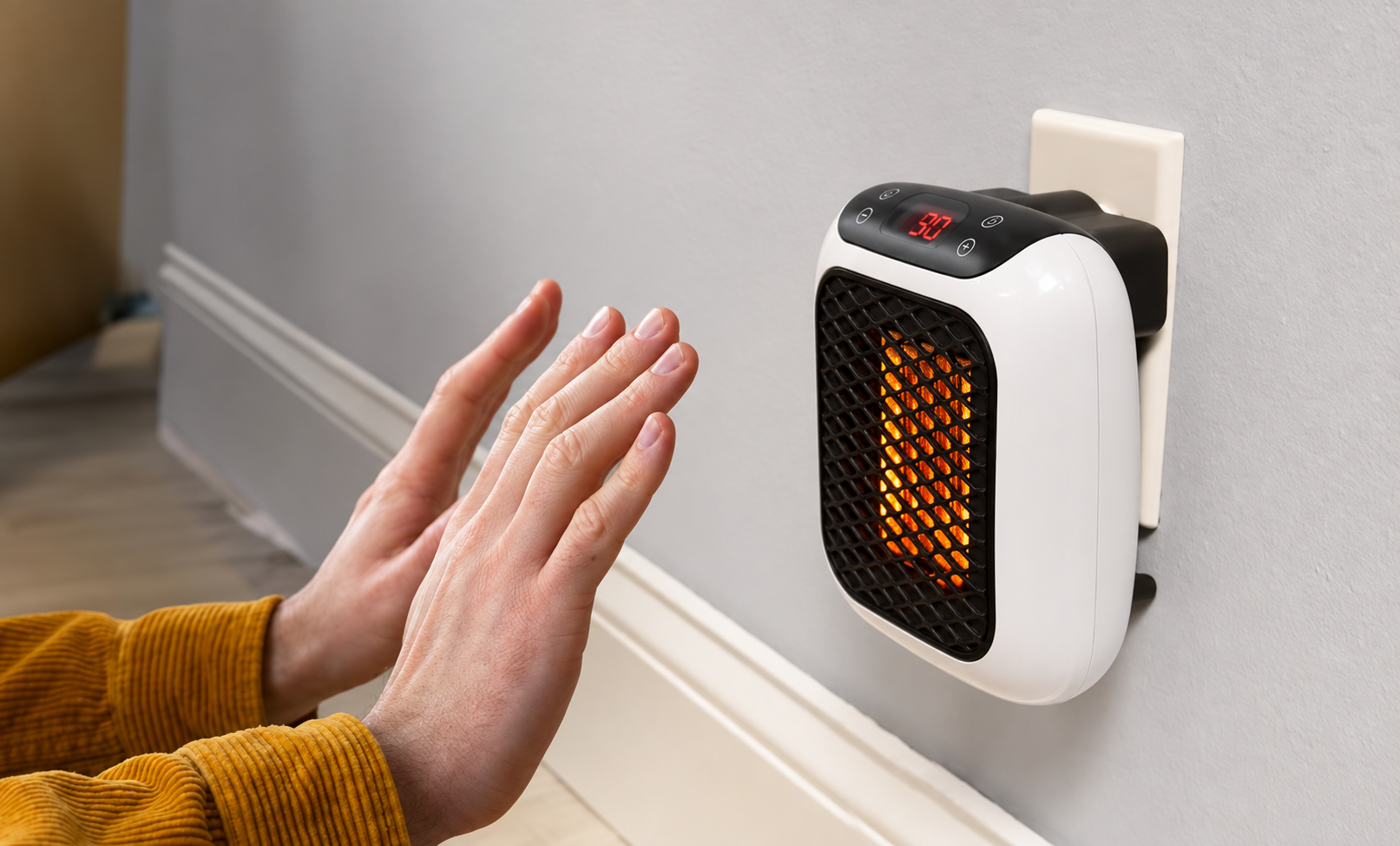
Turn the central thermostat down two or three degrees and heat only the room you're actually occupying with a plug-in unit. A household that spends the evening in one room but heats five of them centrally is spending most of its heating budget on empty space — hallways, spare bedrooms, a kitchen nobody is standing in.
Reverse that pattern and heat the occupied room directly, and the saving is real and measurable on your bill, not theoretical. See cheapest way to heat a room for the full logic and worked comparisons.
Heater types compared on efficiency
| Type | Warm-up speed | Best for |
|---|---|---|
| Ceramic (PTC) | Fast — under a minute | Short bursts, occupied rooms |
| Oil-filled radiator | Slow — 15–20 minutes | All-day background heat |
| Fan heater (metal element) | Fast, but noisier | Quick spot heat |
| Infrared panel | Instant to the body, not the air | Draughty or open spaces |
Features that lower real running cost
- A thermostat, so the unit cycles off automatically instead of running constantly at full power.
- A timer, so it switches off when you leave the room rather than running by accident.
- Fast warm-up, so short bursts of heating are genuinely enough.
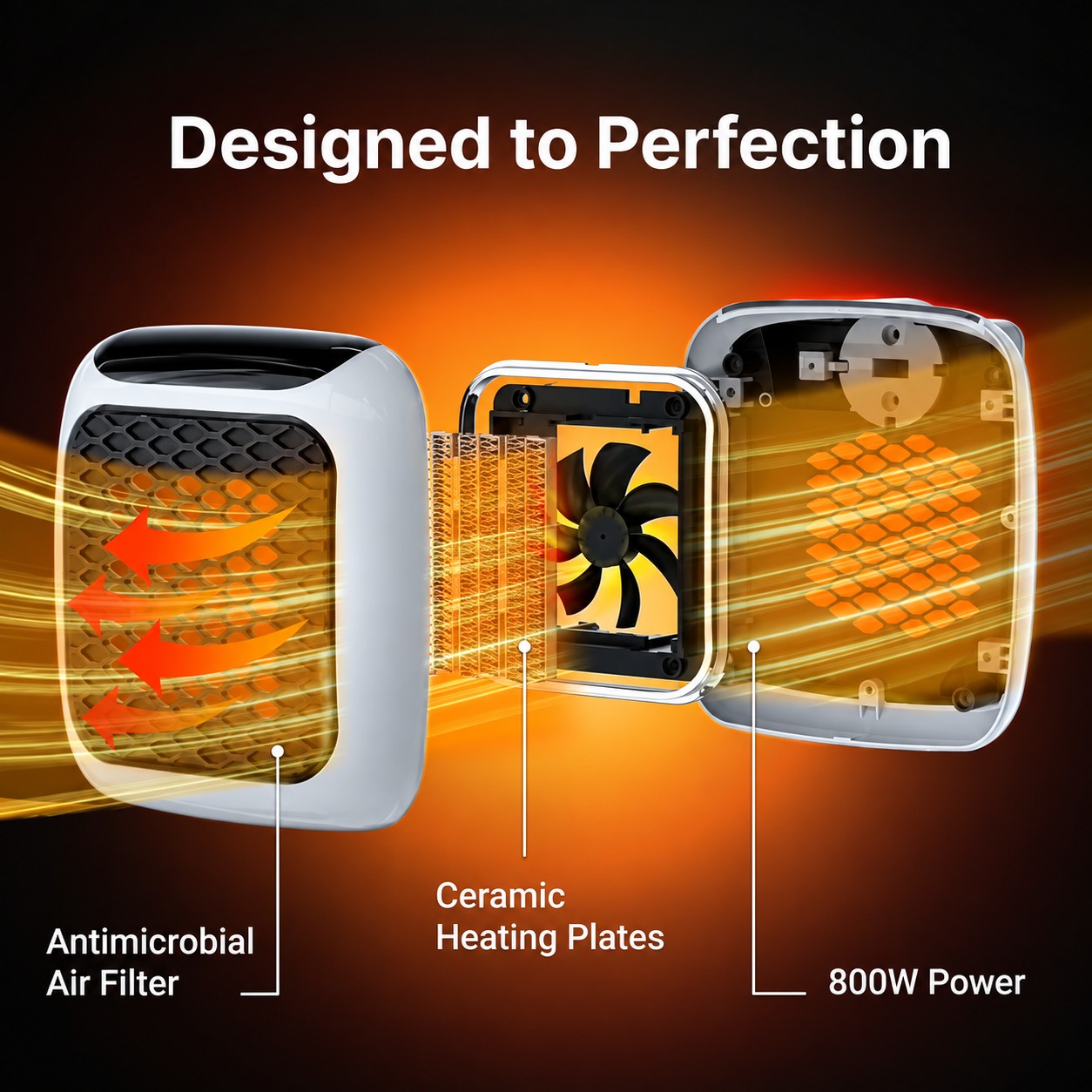
- A clean, washable filter — restricted airflow quietly means longer run times for the same comfort.
- Closing the door of the room you're heating, so warm air isn't lost to the rest of the house.
A worked example
At 800W (0.8 kWh) and a US average rate around $0.17/kWh, four hours of plug-in heating in one room costs roughly $0.54 at full power — call it the price of a coffee, and typically less once a thermostat starts cycling the element. Four hours of raising the whole-home heating system to warm bedrooms, a hallway and a kitchen nobody is using costs several times that.
For the full monthly and seasonal maths, see space heater cost per month and how many watts does a space heater use.
What to check before buying an 'energy efficient' heater
- Does it have a working thermostat, or only a fixed high/low switch?
- Is there a built-in timer, or do you have to remember to switch it off?
- Is the wattage matched to your room size, or oversized for the space?
- Is the filter washable and easy to access?
- Does it include tip-over and overheat protection as standard?
Why '100% efficient' doesn't mean 'cheap to run'
It's true that resistance heaters — ceramic, oil-filled, metal coil — convert essentially all their electrical input into heat, with no meaningful loss the way a gas furnace loses some energy up a flue. But 'efficient at converting electricity to heat' is not the same claim as 'cheap to run', because electricity itself typically costs more per unit of heat than gas. The saving from a space heater comes from heating less space, not from a more efficient watt.
A simple test: is a space heater actually saving you money?
- Are you lowering the central thermostat when the space heater is running? If not, you're paying for both.
- Are you heating one occupied room rather than several empty ones? That's where the saving lives.
- Is the timer switching the unit off when you leave, or is it running unattended for hours?
- Are you comparing a few hours of 800W zone heating against the cost of heating the whole house for the same period?
Electric heating vs central gas or oil heating
| Approach | Warm-up time | Best when |
|---|---|---|
| Plug-in ceramic heater (zone) | ~60 seconds | One or two rooms occupied, rest of house can run cooler |
| Central gas/oil system | Minutes to tens of minutes depending on system | Whole house needs to be warm at once |
| Both combined, thermostat lowered | Immediate in the occupied room | Most households in practice |
WellHeater at a glance
| Detail | Specification |
|---|---|
| Heating type | PTC ceramic convection |
| Room coverage | Up to 130 sq ft / 12 m² |
| Time to warm | About 60 seconds |
| Controls | Touch panel + wireless remote |
| Timer | Built-in auto shut-off timer |
| Safety | Tip-over cut-off, cool-touch housing, cool-down mode |
| Filter | Washable antimicrobial dust filter |
| Power | Standard household wall outlet |
| Warranty | 12 months + 30-day money-back guarantee |
Questions we have not answered here? Email support@getwellheater.net — or read our shipping, returns and warranty terms in full.
Who benefits from an 'energy efficient' space heater
If you spend most of your time in one or two rooms and can lower the central thermostat while heating those rooms directly, a well-controlled ceramic heater like the WellHeater — with a thermostat, timer and fast warm-up — will genuinely cut your heating spend. The saving comes from the usage pattern, not a special element inside the unit.
If you need to heat an entire home evenly around the clock, no plug-in space heater — efficient or otherwise — replaces a properly sized central heating system.
Frequently asked questions
Keep reading
Official website offer
Get up to 75% off WellHeater today
Order from getwellheater.net — the only place to get the genuine unit with the antimicrobial filter, tip-over shut-off and a 30-day money-back guarantee.
- Free shipping
- 30-day refunds
- Secure checkout