WellHeater vs traditional heaters
How a compact 800W ceramic heater actually compares with central heating, oil-filled radiators, fan heaters and infrared panels — on speed, running cost, noise and what each one is really for.
The honest starting point
It needs saying plainly, because plenty of space heater marketing dodges it: an 800W plug-in ceramic heater does not replace central heating. It cannot warm a whole house, and no plug-in heater at any wattage sold for home use realistically can — the physics of heating hundreds of square feet through walls, hallways and multiple rooms is a different job entirely from warming the air around one person in one room.
What a heater like the WellHeater does is let you heat the room you are actually using — a bedroom, a home office, a corner of the living room — to a comfortable temperature in about a minute, while you turn the thermostat on your central heating down a few degrees or off altogether for the rest of the house. That is where the saving genuinely comes from: heating one occupied room instead of five empty ones, not some hidden efficiency trick. Every electric heater, ceramic or otherwise, converts essentially 100% of the electricity it draws into heat — none of them beat that.
How the heater types compare
The table below lines up the WellHeater's ceramic PTC technology against the other heating types people usually consider, on the factors that actually change day-to-day comfort and cost. See how the WellHeater works for more on the ceramic element itself.
| Type | Warm-up time | Running cost / hour | Coverage | Noise | Installation | Best use |
|---|---|---|---|---|---|---|
| Plug-in ceramic (WellHeater) | ~60 seconds for warm air | ~$0.14 at 800W | Up to ~130 sq ft (12 m²) | Quiet fan hum | None — plug in and go | One occupied room, fast top-up warmth |
| Central heating (boiler/furnace) | 20-40 minutes to reach the room | Varies widely by fuel and house size | Whole house | Boiler/furnace noise, quiet at the vent | Professional install, fixed | Warming an entire home on cold days |
| Oil-filled radiator | 15-30 minutes | Similar per-watt cost to any resistive heater | Small-medium room, holds heat after switch-off | Near silent | None, but heavy to move | Steady background warmth in a room you're in for hours |
| Fan heater (budget) | Warm air almost immediately, room takes longer | Similar per-watt cost, often runs at full power constantly | Small room, uneven heat | Noticeably loud | None | A quick blast of warmth, short bursts |
| Infrared panel | Warms objects/people directly, near-instant felt warmth | Similar per-watt cost | Line-of-sight area, not the whole room's air | Silent | Usually wall-mounted, some setup | Directional warmth in draughty or high-ceiling spaces |
Running cost per hour, side by side
All resistive electric heaters — ceramic, oil-filled, fan or infrared — turn electricity into heat at essentially the same efficiency, so cost per hour comes down almost entirely to wattage. The table below assumes each heater type running at a typical wattage for its category, at the US average residential rate of $0.17/kWh. See our cheapest way to heat a room guide for the full comparison across more scenarios.
| Heater type | Typical wattage | Cost per hour |
|---|---|---|
| WellHeater (ceramic, thermostat cycling) | 800W | ~$0.14 (often less once the thermostat cycles off) |
| Oil-filled radiator | 1500W | ~$0.26 |
| Budget fan heater (no thermostat) | 2000W | ~$0.34 |
| Infrared panel | 1000W | ~$0.17 |
Against central heating
Central heating is the right tool for warming an entire house on a freezing morning, and it is not something a plug-in heater competes with head-on. It is the wrong tool, though, for one person reading in one room at 9pm — running a boiler or furnace to heat a whole house so that one room is comfortable wastes most of that heat on rooms nobody is in.
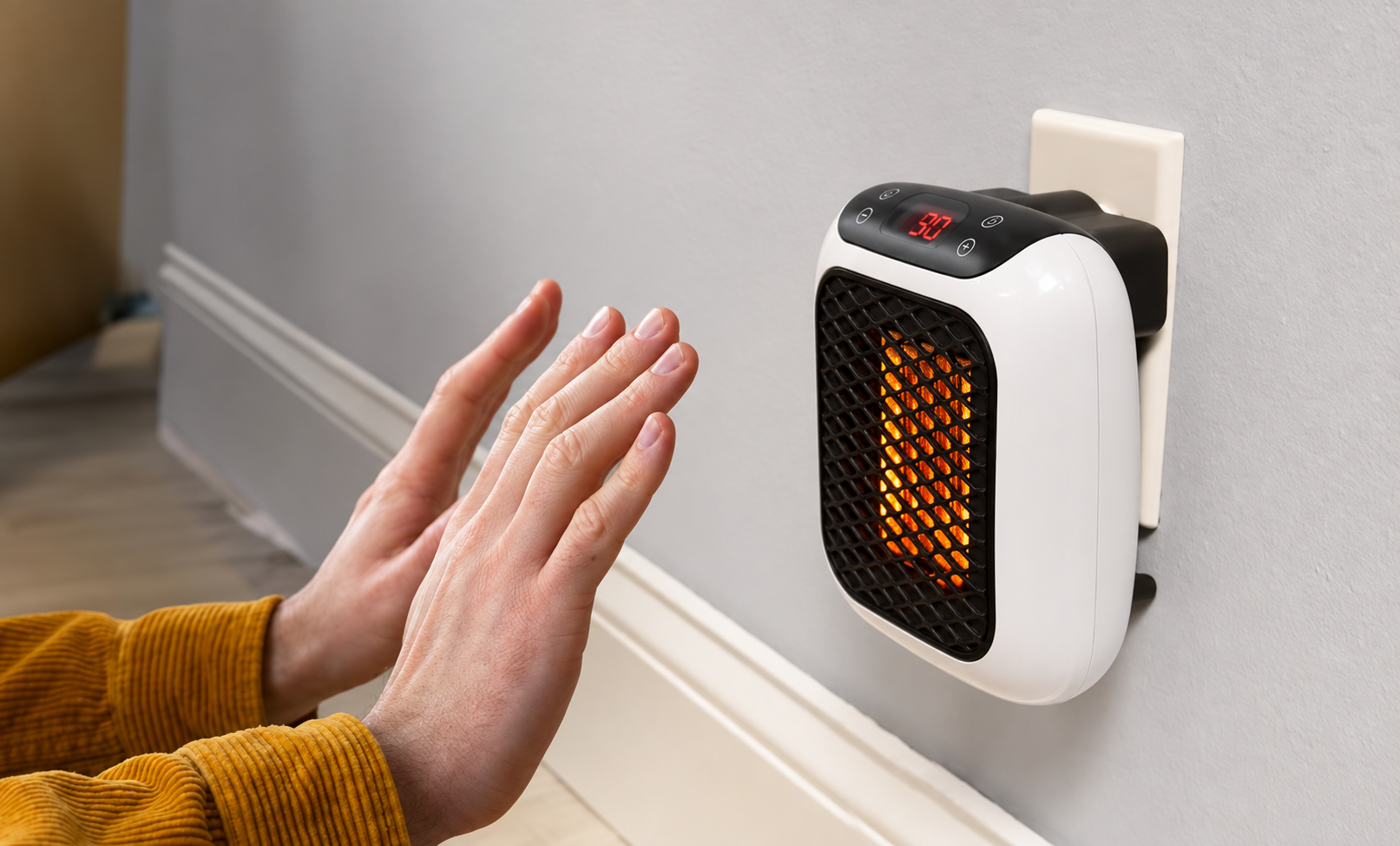
The WellHeater is built for that second scenario: warm air in the room you're using within about a minute, while the rest of the house's thermostat comes down. Turning your central heating thermostat down by even a few degrees while a plug-in heater covers the room you're actually in is where most of the household saving comes from — not from the plug-in heater being intrinsically cheaper to run per watt.
Against oil-filled radiators
Oil-filled radiators hold heat well after they're switched off, because the oil inside stays warm and keeps radiating for a while — useful in a room you'll be in for several hours. The trade-off is speed: they typically take 15-30 minutes to get going and are heavy to move between rooms, since you're carrying several litres of heated oil in a metal casing.
Ceramic heating is the opposite trade-off: warm air in about 60 seconds, light enough to carry in one hand, and the element stops drawing full power once the room reaches your set temperature. If you want warmth the moment you walk in, ceramic wins; if you want a heater that stays warm for a while after it switches off, an oil-filled radiator has that edge.
Against cheap fan heaters
A bargain-bin fan heater is usually loud, has an exposed heating element, and runs flat-out at full power until you unplug it — there's often no thermostat and no timer to cycle it down once the room warms up, which means you pay for full power the entire time it's plugged in. That's the single biggest driver of unnecessarily high running costs among basic electric heaters.
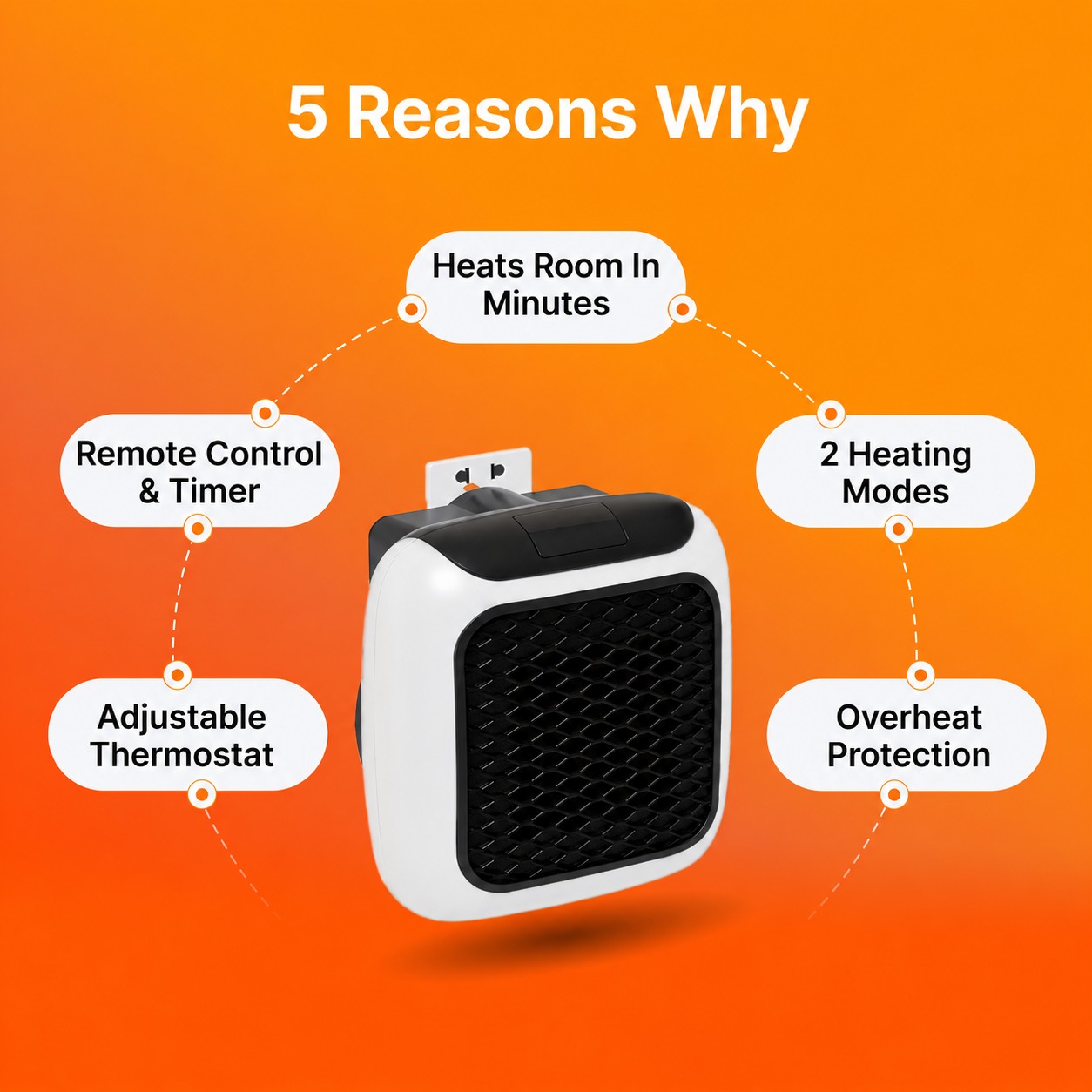
The WellHeater adds a digital thermostat that cycles the element once the room reaches temperature, a wireless remote, a timer, tip-over shut-off and a cool-touch housing — see the full space heater safety checklist for why those controls matter, particularly overnight or around children and pets.
Against infrared panels
Infrared panels warm objects and people directly rather than heating the air, which makes them effective in draughty spaces or rooms with high ceilings where warm air would otherwise just rise and disperse. They're silent and often wall-mounted, but they only warm what's in their line of sight — step out of that zone and the felt warmth drops off quickly, and most need some wall-mounting setup rather than simply plugging in.
A ceramic heater like the WellHeater instead warms the air in the room, so it keeps working wherever you sit within the space, and it needs no mounting — plug it in, set the timer, done.
Against a heat pump
A heat pump is among the most efficient ways to heat a whole home, and also one of the most expensive to install, with the cost running into thousands of dollars for the unit and installation. A plug-in ceramic heater costs a fraction of that and works within a minute of being taken out of the box.
These aren't really competing products. Many households run both: the heat pump handles the whole house, and a plug-in heater like the WellHeater tops up the one room someone is actually sitting in during the coldest hours, without running the whole system harder than it needs to.
Noise, safety and everyday practicality
- Noise: oil-filled radiators and infrared panels are near-silent; the WellHeater's fan produces a quiet hum; budget fan heaters are noticeably louder; central heating noise depends on the boiler or furnace location, usually not the room itself.
- Safety controls: budget fan heaters and older radiators often lack tip-over cut-off or overheat protection; the WellHeater includes both as standard, along with a cool-touch housing — full detail in space heater safety.
- Portability: the WellHeater and fan heaters are light and easy to move room to room; oil-filled radiators are heavy; central heating and heat pumps are fixed installations.
- Upfront cost: a plug-in heater is a one-time purchase with no installation; central heating and heat pumps involve a much larger upfront and professional installation cost.
- Maintenance: the WellHeater's washable filter needs rinsing every few weeks; central heating systems need periodic professional servicing.
Which heater suits which situation
| Situation | Best fit | Why |
|---|---|---|
| Whole house on a cold morning | Central heating | Only system designed to warm every room at once |
| One occupied bedroom or office | Plug-in ceramic (WellHeater) | Warm air in ~60 seconds, thermostat and timer control the cost |
| Sitting in one room for several hours | Oil-filled radiator or ceramic heater | Both hold a room warm; ceramic gets there faster, oil retains heat longer after switch-off |
| Draughty room or high ceilings | Infrared panel | Warms people and surfaces directly rather than air that disperses |
| Quick blast of warmth before getting dressed | Fan heater or ceramic heater | Both deliver near-instant warm air; ceramic adds thermostat control |
| Reducing whole-home heating bills | Central heating turned down + plug-in ceramic heater for the occupied room | Heats only the space in use instead of the whole house |
What buyers actually report
Our WellHeater reviews page collects verified feedback from 1,284 ratings, averaging 4.6 out of 5 — the recurring theme is people using it alongside their existing central heating rather than instead of it: warming a bedroom before bed, an office during the day, or a living room corner in the evening while the rest of the house's thermostat comes down. If you're weighing up current pricing across single and multi-packs, see WellHeater pricing, or check the FAQ for more on setup and use.
WellHeater at a glance
| Detail | Specification |
|---|---|
| Heating type | PTC ceramic convection |
| Room coverage | Up to 130 sq ft / 12 m² |
| Time to warm | About 60 seconds |
| Controls | Touch panel + wireless remote |
| Timer | Built-in auto shut-off timer |
| Safety | Tip-over cut-off, cool-touch housing, cool-down mode |
| Filter | Washable antimicrobial dust filter |
| Power | Standard household wall outlet |
| Warranty | 12 months + 30-day money-back guarantee |
Questions we have not answered here? Email support@getwellheater.net — or read our shipping, returns and warranty terms in full.
The honest verdict
No plug-in heater replaces a home heating system, and the WellHeater doesn't pretend to. What it replaces is the habit of heating five empty rooms to keep one person warm in the sixth — and that habit, not any efficiency trick, is where the savings live. Compared with a budget fan heater it adds a thermostat, timer and proper safety controls; compared with an oil-filled radiator it's faster to warm up and easier to move; compared with central heating it's simply a different job — a zone heater, not a house heater.
If your need is warming one room quickly without running the whole house's heating, the WellHeater fits well. If you need to heat multiple rooms or an entire home, no plug-in heater at any price will do that job — central heating remains the right tool. You can see current pricing or order from the official store, backed by free tracked shipping, dispatch within one business day, a 30-day money-back guarantee and a 12-month warranty (extendable to 3 years at checkout).
Frequently asked questions
Keep reading
Official website offer
Get up to 75% off WellHeater today
Order from getwellheater.net — the only place to get the genuine unit with the antimicrobial filter, tip-over shut-off and a 30-day money-back guarantee.
- Free shipping
- 30-day refunds
- Secure checkout