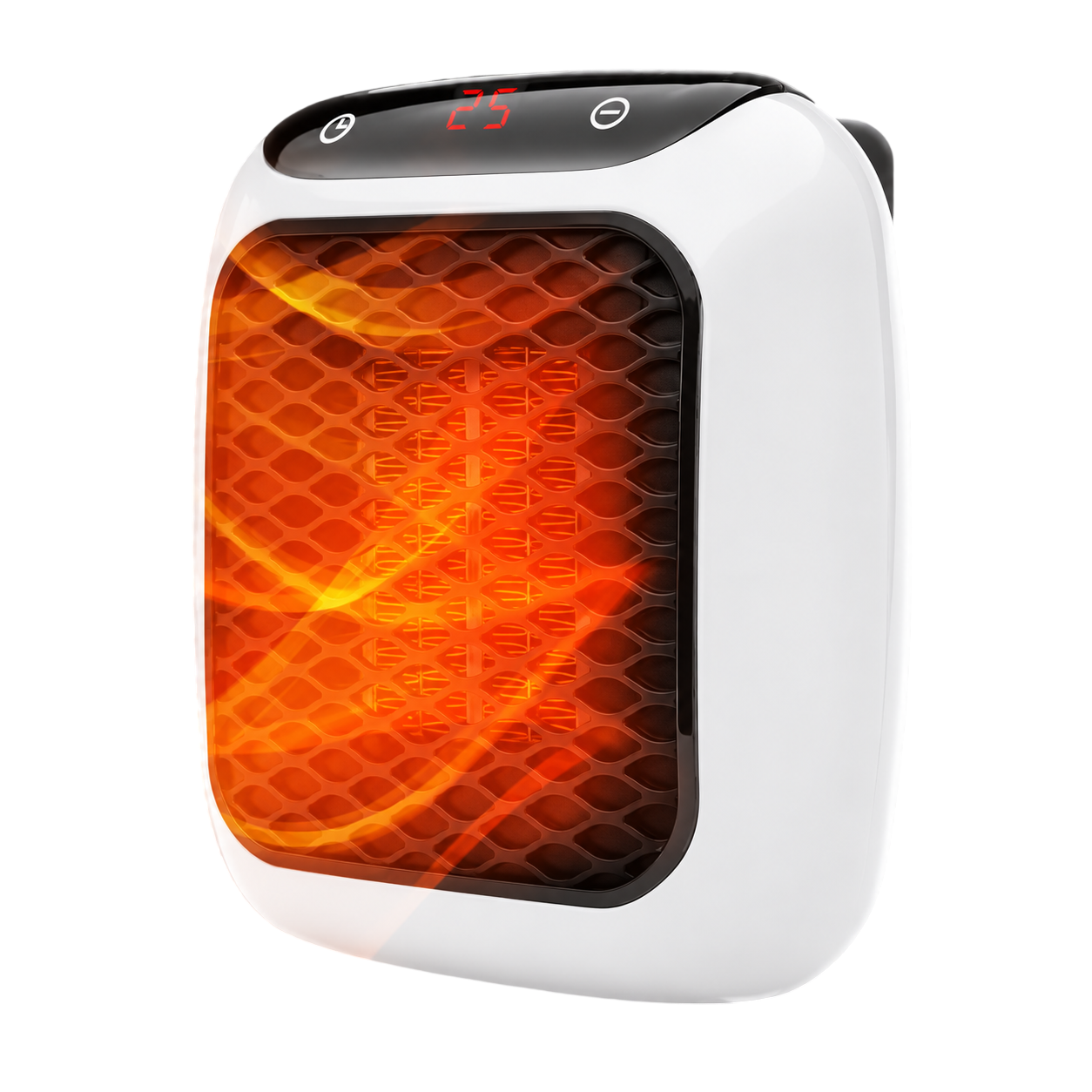
Electric heating for an RV, camper or caravan
On a powered pitch, a small plug-in electric heater is a straightforward way to stay warm without burning gas or adding moisture to an already compact space.
Why a small ceramic unit suits a camper
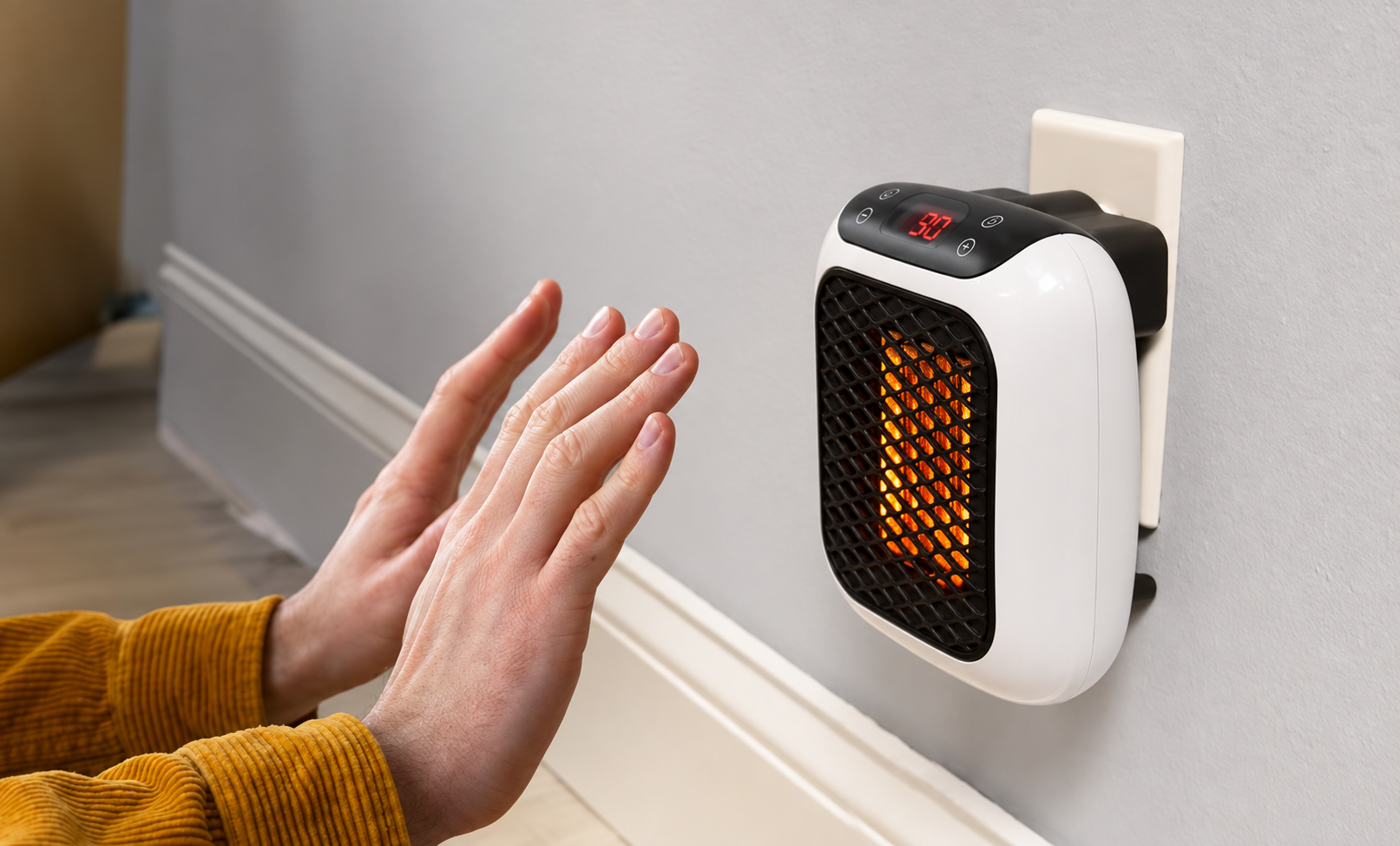
The interior of an RV, camper or caravan is small and well enclosed, which is exactly the kind of space a compact ceramic heater performs best in — the same enclosed-space advantage covered in small room heater. It warms the interior within about a minute, produces no flame, and adds no moisture to the air, unlike gas heating, which generates water vapour as a byproduct of combustion.
Watch your hook-up amp limit
Campsite pitches are commonly limited to 6, 10 or 16 amps. Add up everything running at once — kettle, fridge, phone charger, heater — before you trip the post and lose power to everything. A lower heater setting is often the difference between a warm van and a dark one for the rest of the evening.
Typical amp budgets on a pitch
| Hook-up rating | Approx. total wattage available | Room for an 800W heater |
|---|---|---|
| 6A (~1.4kW at 230V) | ~1400W | Tight — limits other appliances |
| 10A (~2.3kW at 230V) | ~2300W | Comfortable alongside light appliances |
| 16A (~3.7kW at 230V) | ~3700W | Plenty of headroom for most combinations |
Safety in a small space
- Stand the heater on a flat, hard, stable surface — never on bedding or soft furnishings.
- Keep the airflow clear of curtains, sleeping bags and stored items.
- Use the built-in timer rather than running the heater overnight in an occupied, enclosed space.
- Keep a working carbon monoxide alarm on board if you also use any gas appliances.
Managing condensation
Electric heating does not add moisture directly, but warming the air raises the amount of water vapour it can hold before it condenses on cold surfaces like windows. Brief daily ventilation — cracking a window or roof vent for a few minutes — helps the van stay dry regardless of which heating method you use.
Setting up electric heating on hook-up
A short checklist keeps things simple and avoids tripping the site's supply: check the pitch rating, total up what else is running, plug straight into the hook-up socket, position the heater on a stable surface clear of fabric, and set a timer rather than running it continuously overnight.
Off-grid and battery power realities
An 800W heater is designed for mains hook-up power, not for running off a leisure battery and inverter — the continuous draw would drain even a large battery bank within an hour or two. Off-grid, most vans rely on gas heating or a dedicated low-power heating system instead, keeping the plug-in ceramic heater for pitches with mains hook-up.
Night-time settings for a small, enclosed van
| Situation | Suggested approach |
|---|---|
| Warming up before bed | Run on a timer for 20–40 minutes, then let it switch off |
| Very cold night, insulated van | Short session before bed plus a brief morning timer rather than continuous overnight use |
| Damp or steamed-up windows | Crack a roof vent briefly alongside heating to manage condensation |
| Travelling between pitches | Unplug and stow securely — never run while driving |
Insulation reality check for older vans
A van or caravan with single-glazed windows and thin, older insulation loses heat much faster than a newer, well-insulated model of the same size. In that situation, expect shorter retained warmth after the heater switches off, and budget for slightly longer or more frequent timed sessions rather than assuming the heater is underperforming.
Thermal curtains or window covers over cab windows, and a draught excluder at the door, both help an older van hold onto the warmth a compact heater produces, so the timer-based routine stretches further overnight.
WellHeater at a glance
| Detail | Specification |
|---|---|
| Heating type | PTC ceramic convection |
| Room coverage | Up to 130 sq ft / 12 m² |
| Time to warm | About 60 seconds |
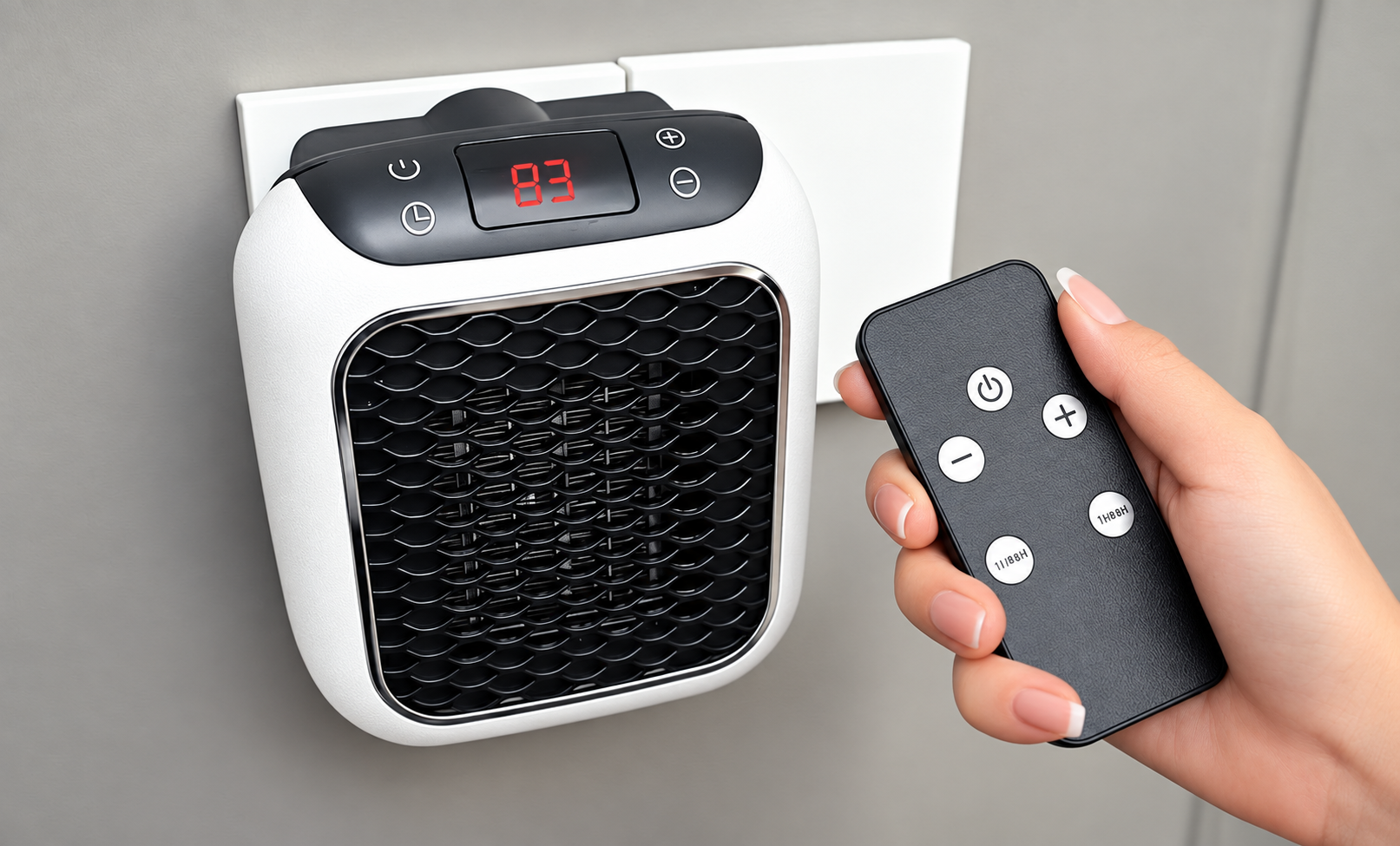
| Controls | Touch panel + wireless remote |
| Timer | Built-in auto shut-off timer |
| Safety | Tip-over cut-off, cool-touch housing, cool-down mode |
| Filter | Washable antimicrobial dust filter |
| Power | Standard household wall outlet |
| Warranty | 12 months + 30-day money-back guarantee |
Questions we have not answered here? Email support@getwellheater.net — or read our shipping, returns and warranty terms in full.
Who this suits — and who it doesn't
A compact plug-in ceramic heater like the WellHeater suits campers, RVs and caravans on a powered hook-up where the interior is small and enclosed — it's fast, dry and simple to run within a sensible amp budget. It doesn't suit off-grid setups without mains hook-up power, and it isn't a substitute for proper insulation in a van used through genuinely cold winter conditions — for that, dedicated RV heating systems designed for the vehicle are the more realistic answer. Check the current official-store price and the 12-month warranty before packing one for a trip.
Frequently asked questions
Keep reading
Official website offer
Get up to 75% off WellHeater today
Order from getwellheater.net — the only place to get the genuine unit with the antimicrobial filter, tip-over shut-off and a 30-day money-back guarantee.
- Free shipping
- 30-day refunds
- Secure checkout