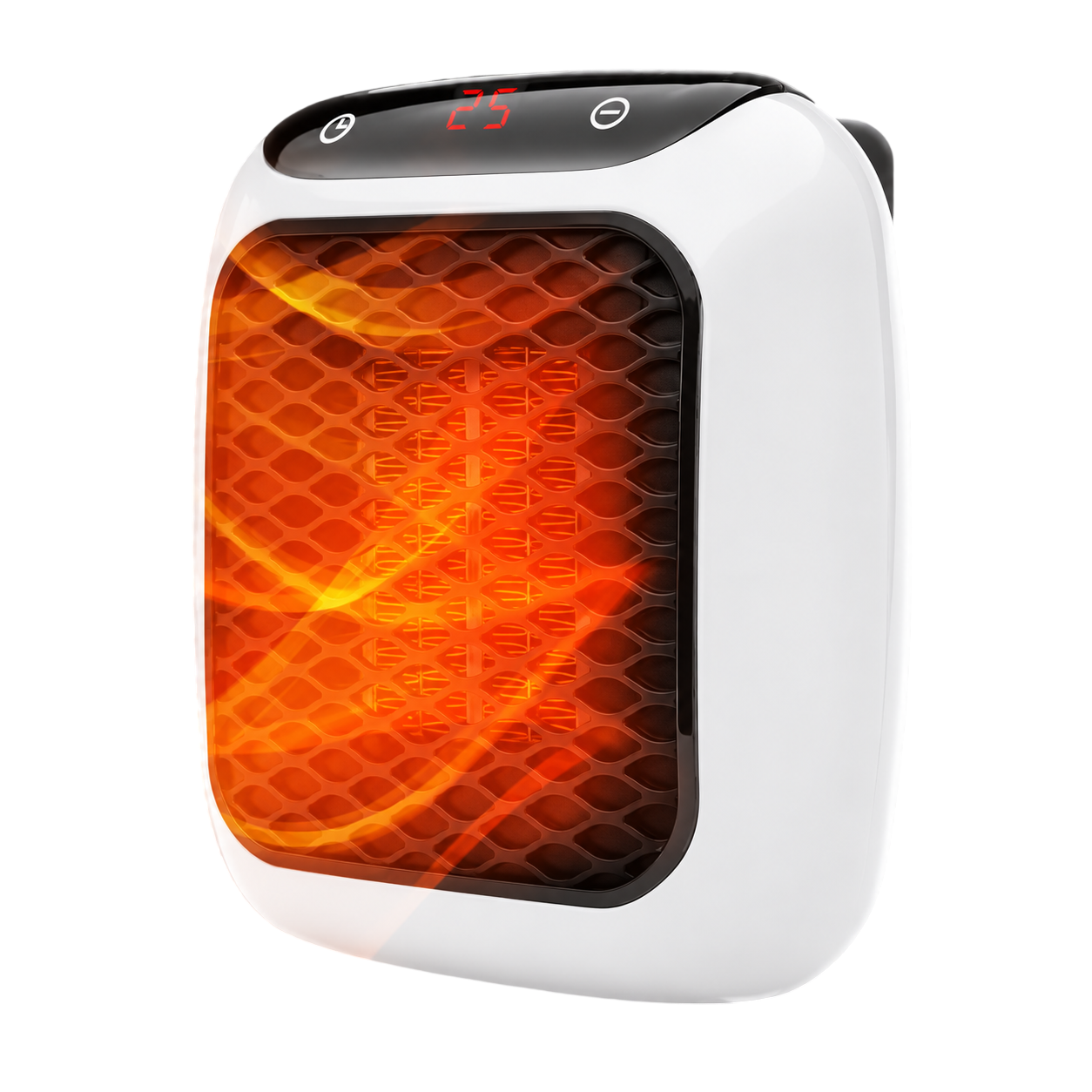
Heating a cold bathroom safely
A cold bathroom is a five-minute problem twice a day, which makes it a good case for a portable heater used correctly with a timer — but the electrical safety rules here are non-negotiable.
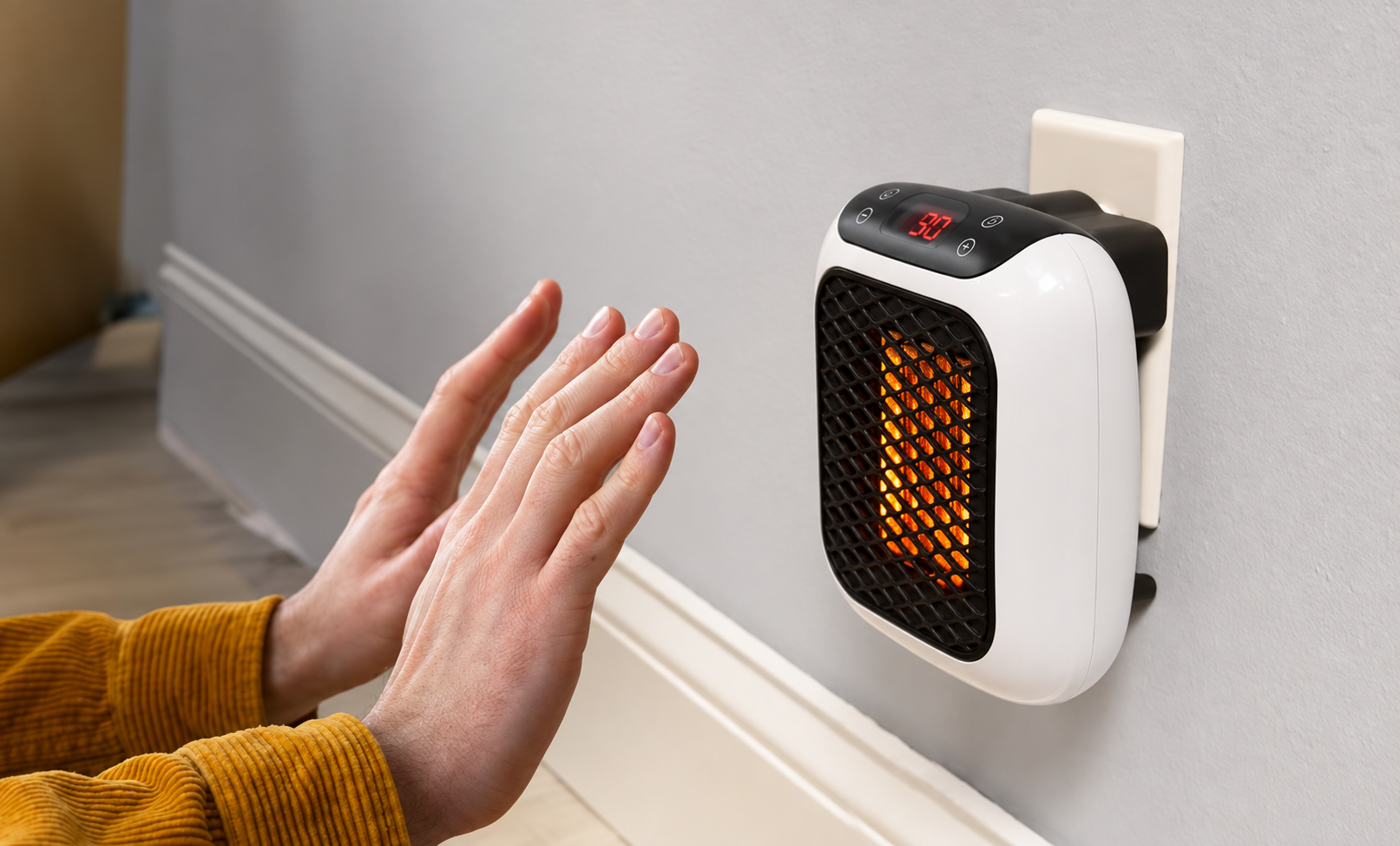
Safety first — read this before anything else
- Never place a portable heater where it can be reached from the bath or shower.
- Never use one with wet hands, on a wet floor, or near splash zones.
- Plug directly into a wall socket located outside any wet zone.
- Follow your country's wiring rules for sockets in or near bathrooms — in some regions, portable heaters are not permitted inside the bathroom at all, and only fixed, appropriately rated fittings are allowed.
The practical approach many households use
Many people warm the bathroom from the landing or hallway with the door open for around ten minutes before a shower, then remove the heater entirely before entering the wet zone. It's fast, it avoids every risk associated with electricity near water, and it costs a fraction of running a central heating system for one small room.
This approach pairs well with the timer-based habits covered in portable heater with remote — a short, timed pre-warm rather than continuous running.
Bathroom heating options compared
| Option | Electrical safety | Typical cost |
|---|---|---|
| Portable heater, used from hallway | Safe if kept well away from wet zones | Low — short sessions only |
| Fixed, IP-rated bathroom heater | Designed and rated for bathroom use | Higher upfront, professional install |
| Heated towel radiator (always on) | Safe, fixed installation | Higher if run continuously |
| Central heating for whole house | Safe | Highest for a single small room |
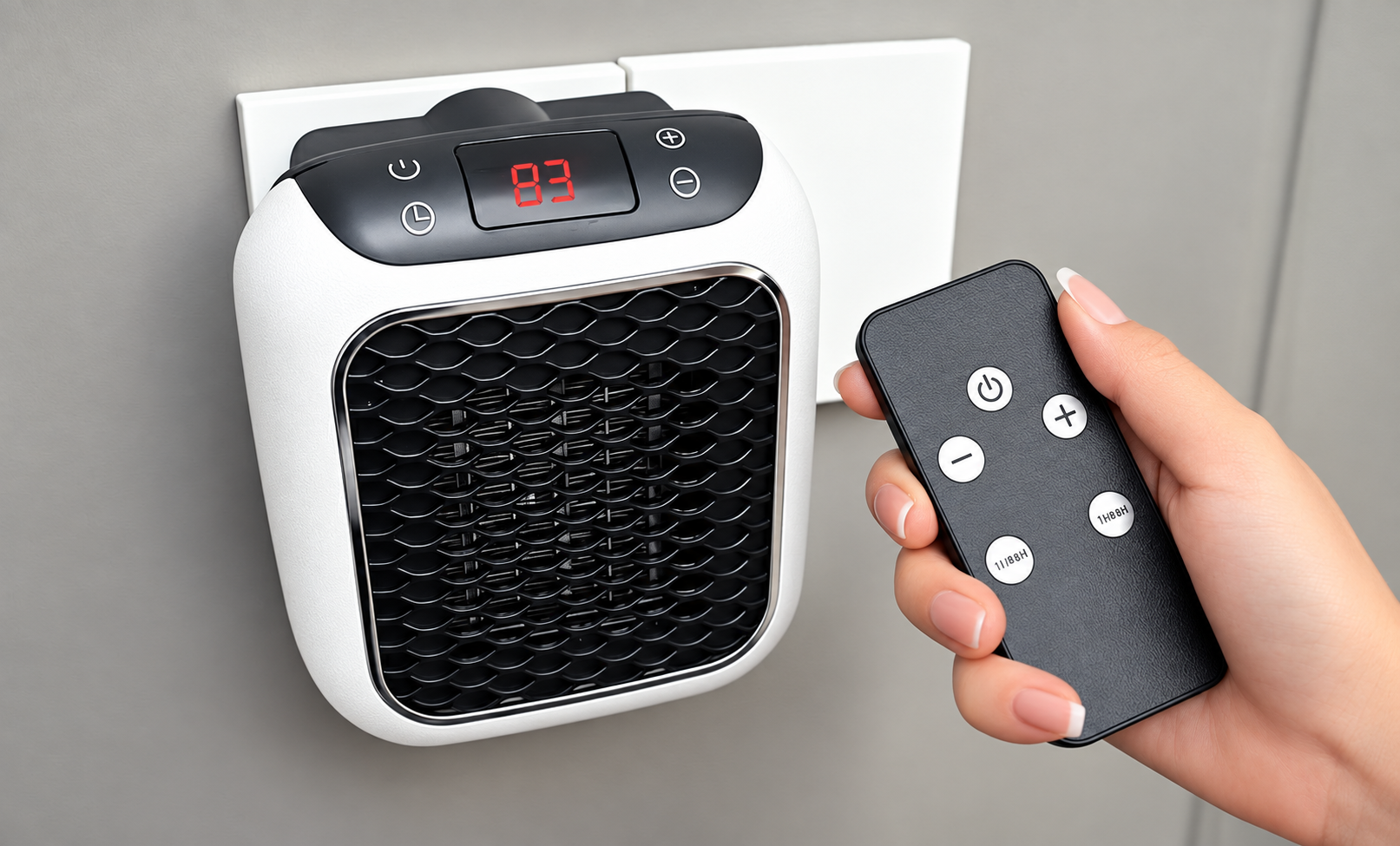
Features that help in this use case
- Fast warm-up so a ten-minute session outside the bathroom is genuinely enough.
- A built-in timer so it's never left running unattended.
- Tip-over shut-off and a cool-touch housing for extra reassurance.
- Light enough to carry easily in one hand between rooms.
Running cost of pre-warming a bathroom
At 800W (0.8 kWh) and a US average rate of roughly $0.17/kWh, ten minutes of use costs a small fraction of a cent to a few cents — trivial compared with keeping a towel radiator hot all day or running the central heating system for a single small room. See space heater cost per month for broader comparisons.
What not to do in a bathroom
- Don't run a cord across the floor where it could contact water.
- Don't place the heater on a windowsill or shelf near the bath or shower.
- Don't use a heater with a damaged cord or housing near any wet room.
- Don't leave any plug-in heater running while you're not in the room.
Why electrical safety rules exist here specifically
Water conducts electricity, and a bathroom combines standing water, wet skin and often a smaller room with limited distance between fixtures and sockets. That's why many countries regulate socket placement and appliance types near baths and showers far more strictly than in any other room of the house. None of this is optional caution — follow your local electrical code, not general heating advice, whenever the two conflict.
Placement do's and don'ts at a glance
| Do | Don't |
|---|---|
| Plug into a wall socket outside the wet zone | Plug into a socket within reach of the bath or shower |
| Warm the room from the hallway with the door open | Bring the heater into the bathroom itself |
| Stand it on a dry, hard floor | Stand it on a bath mat or damp tile |
| Remove it before you undress or run water | Leave it running while you shower |
| Check local wiring rules before first use | Assume the rules are the same everywhere |
Bathrooms with poor ventilation
A bathroom without an extractor fan or window holds moisture in the air longer after a shower, and that moisture can settle on any nearby electrical fitting, including sockets in an adjoining hallway if they're close to the door. Give the room a few extra minutes to clear before bringing any plug-in appliance near the doorway, and keep the heater further back if steam is still visibly present.
WellHeater at a glance
| Detail | Specification |
|---|---|
| Heating type | PTC ceramic convection |
| Room coverage | Up to 130 sq ft / 12 m² |
| Time to warm | About 60 seconds |
| Controls | Touch panel + wireless remote |
| Timer | Built-in auto shut-off timer |
| Safety | Tip-over cut-off, cool-touch housing, cool-down mode |
| Filter | Washable antimicrobial dust filter |
| Power | Standard household wall outlet |
| Warranty | 12 months + 30-day money-back guarantee |
Questions we have not answered here? Email support@getwellheater.net — or read our shipping, returns and warranty terms in full.
Who this approach suits
Pre-warming a bathroom from an adjoining hallway or landing with a portable heater suits anyone who wants a quick, low-cost way to take the chill off before a shower, provided local wiring rules permit it and the heater never enters the wet zone itself. It does not replace a properly rated, fixed bathroom heating fixture, and it should never be treated as safe to use inside the wet area — check space heater safety and your local electrical code before relying on this method. See how it works for what the unit does on a single charge of warm-up, and the 30-day money-back guarantee if the pre-warm routine doesn't suit your bathroom layout.
Frequently asked questions
Keep reading
Official website offer
Get up to 75% off WellHeater today
Order from getwellheater.net — the only place to get the genuine unit with the antimicrobial filter, tip-over shut-off and a 30-day money-back guarantee.
- Free shipping
- 30-day refunds
- Secure checkout